
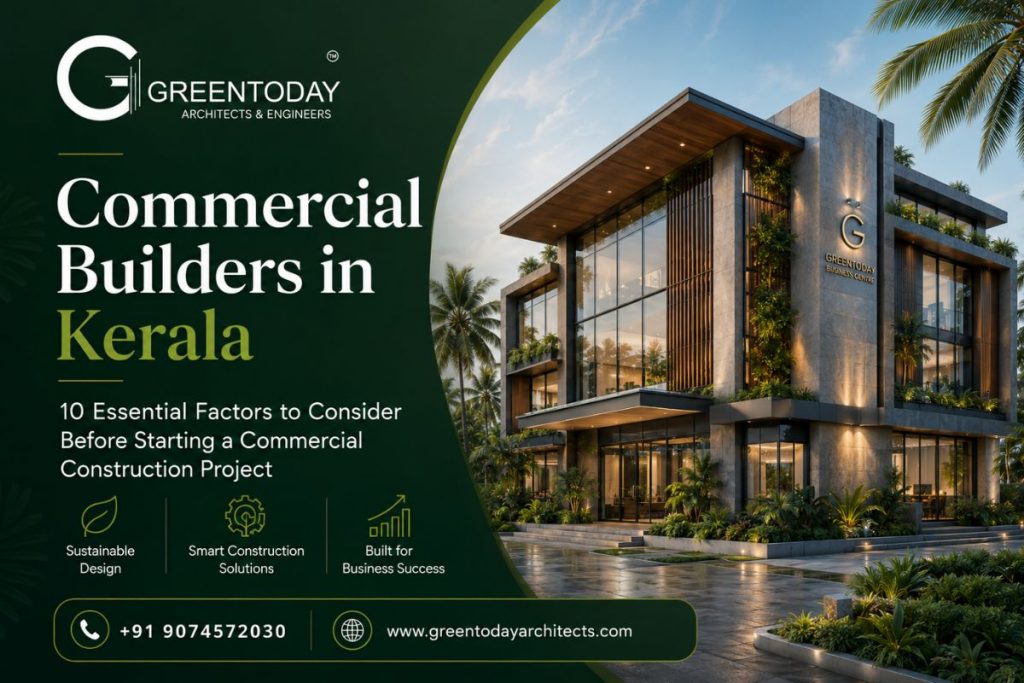
10 Essential Factors to Consider Before Hiring Commercial Builders in Kerala
Choosing the right commercial builders in Kerala is an important decision for any business owner, developer, or investor planning a commercial construction project. Whether you are developing an office complex, retail space, healthcare facility, industrial unit, or mixed-use development, making informed decisions early in the process can help reduce risks, control costs, and ensure timely project completion.
Why Planning Matters Before Starting a Commercial Construction Project
Launching a commercial construction project is a major investment that demands strategic planning, technical expertise, and a clear understanding of long-term business goals. Whether you are developing an office complex, retail space, healthcare facility, industrial unit, or mixed-use development, making informed decisions early in the process can significantly reduce risks, control costs, and ensure timely completion.
A successful commercial project is built on a foundation of sustainable design, efficient planning, and innovative construction practices. Here are ten essential factors every developer and business owner should consider before breaking ground.
1. Define Your Project Goals and Business Objectives
Before beginning the design process, establish clear objectives for your project.
Consider questions such as:
- What is the primary purpose of the building?
- Who will occupy or use the space?
- What are your long-term expansion plans?
- What return on investment (ROI) do you expect?
Having well-defined goals helps architects and construction teams create solutions that align with your vision and business needs.
2. Choose the Right Location for Your Commercial Project
Location plays a crucial role in the success of any commercial development.
Evaluate factors such as:
- Accessibility and transportation links
- Proximity to customers, suppliers, and employees
- Local infrastructure and utilities
- Future development potential
- Environmental conditions and site constraints
A thorough site analysis can help identify opportunities and challenges before construction begins.
3. Establish a Realistic Commercial Construction Budget
A comprehensive budget should account for more than just construction costs.
Include expenses related to:
- Land acquisition
- Design and consultancy fees
- Government approvals and permits
- Site preparation
- Construction materials and labor
- Technology integration
- Landscaping and external works
- Contingency reserves
A well-planned budget helps prevent cost overruns and ensures financial stability throughout the project lifecycle.
4. Understand Regulatory Requirements and Building Approvals
Commercial construction projects must comply with local regulations and building codes.
Key considerations include:
- Zoning regulations
- Building permits and approvals
- Environmental clearances
- Fire and safety standards
- Accessibility requirements
- Energy efficiency guidelines
Working with experienced professionals ensures compliance and minimizes delays.
5. Prioritize Sustainable Commercial Building Design
Sustainability is no longer an option; on the other hand, it is a business necessity.
Incorporating green building practices can deliver benefits such as:
- Lower operating costs
- Reduced energy consumption
- Improved indoor air quality
- Enhanced brand reputation
- Increased property value
Features like energy-efficient systems, natural lighting, rainwater harvesting, and renewable energy integration contribute to long-term value.
6. Select the Right Commercial Builders in Kerala
The success of your project depends heavily on the expertise of your team.
Look for professionals who offer:
- Proven commercial construction experience
- Strong project management capabilities
- Transparent communication
- Sustainable design expertise
- Knowledge of local regulations
Choosing the right partner ensures smooth coordination from concept to completion.
7. Develop a Detailed Project Timeline
A realistic timeline helps keep the project on track and minimizes disruptions.
Key phases include:
- Planning and feasibility studies
- Design development
- Approval processes
- Procurement
- Construction
- Testing and commissioning
Allow flexibility for unforeseen challenges such as weather conditions, material shortages, or regulatory delays.
8. Integrate Smart Building Technologies
Modern commercial spaces increasingly rely on smart technologies to improve efficiency and user experience.
Consider integrating:
- Building automation systems
- Smart lighting and HVAC controls
- Energy monitoring solutions
- Security and access control systems
Smart technologies enhance operational efficiency while reducing long-term costs.
9. Plan for Future Growth and Flexibility
Commercial buildings should be designed to adapt to changing business requirements.
Flexible design strategies include:
- Modular layouts
- Expandable infrastructure
- Multi-functional spaces
- Scalable technology systems
Future-ready buildings provide greater value and reduce renovation costs over time.
10. Conduct a Comprehensive Risk Assessment
Identifying potential risks early helps avoid costly disruptions.
Assess factors such as:
- Market fluctuations
- Supply chain challenges
- Environmental risks
- Labor availability
- Safety concerns
- Financial uncertainties
A proactive risk management plan ensures better decision-making throughout the project.
Build for Long-Term Success with GreenToday Architects, Trusted Commercial Builders in Kerala
Commercial construction is about more than creating physical spaces, it is about building environments that support growth, efficiency, and sustainability.
By carefully evaluating these ten factors before starting your project, you can minimize risks, maximize returns, and create a commercial space that delivers lasting value.
Whether you are seeking expert insights into commercial construction or require comprehensive architectural and construction services, GreenToday Architects delivers the experience, innovation, and dependability you can trust. Renowned for excellence in both architectural design and project execution, the firm creates spaces that are aesthetically distinctive, highly functional, and designed to meet the demands of the future.
GreenToday Architects boasts a diverse portfolio that encompasses elegant private villas, contemporary apartment developments, dynamic commercial spaces, and serene resort destinations. Every project is approached with a unique vision, combining creative design thinking with technical expertise, skilled craftsmanship, and modern construction methodologies.
From concept to completion, each development is guided by meticulous planning and precision. This includes comprehensive geotechnical evaluations, integrated architectural and engineering solutions, and efficient construction practices that ensure durability, performance, and long-term value. The company embraces biophilic design principles, sustainable building techniques, smart automation systems, and robust safety standards to create environments that are both innovative and environmentally responsible.
At the heart of GreenToday Architects lies an unwavering commitment to quality, transparency, and integrity, imposed by its chief, Mr. Faisal M Asan, a seasoned senior civil engineer who was instrumental in manifesting diverse engineering projects, both in India and the Middle East. By maintaining rigorous quality control measures and adhering to ethical business practices, the company consistently exceeds client expectations. More than a conventional design-and-build firm, GreenToday Architects serves as a long-term partner, offering a comprehensive one-year warranty and lifetime support to provide clients with lasting confidence and peace of mind.
In the commercial sector, GreenToday Architects integrates flexible design strategies, intelligent technologies, and climate-responsive architecture to develop future-ready workspaces. By aligning global workplace trends with local environmental conditions, the firm is redefining the way office environments are designed and experienced across the region.

Corporate Address
GREENTODAY Architects and Engineers
4 B Arcade, Infopark Road, Kusumagiri P.O, Kakkanad- Ernakulam, Kerala – 682030 India
Branch Address
GREENTODAY Architects and Engineers
Peedikayil Building
Cochin Bank Jn
Aluva, Ernakulam, Kerala – 683101
Registered Address
GreenToday Architects and Engineers
‘Breeze ‘
Pattimattom PO 683562 Ernakulam Kerala India
Our Hours
- Monday — Friday 9 am – 5 pm
- Saturday — 11 am – 4 pm
- Sunday — Closed
Service Areas
Contact Us
Follow Us
All rights reserved to GreenToday Architects & Engineers.
Maintained by www.irisqtechnologies.com