
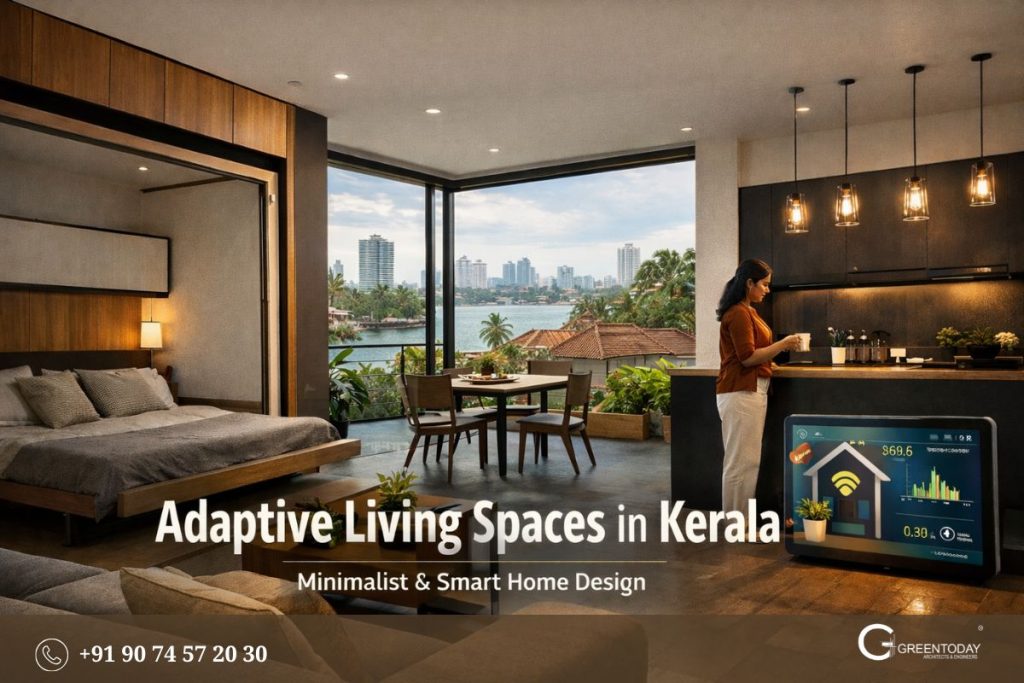
Adaptive Living Spaces in Kerala | Minimalist Smart Home Design by GreenToday
Modern lifestyles are evolving rapidly, and adaptive living spaces in Kerala are becoming a key part of this transformation. Rising urban density, changing family structures, environmental concerns, and technological innovation are shaping a new architectural philosophy, adaptive living spaces. These homes embrace minimalism in form but intelligence in function, creating environments that are flexible, efficient, and deeply responsive to human needs.
Rather than simply reducing space or decoration, modern minimalism focuses on intentional design, where every element has purpose and every square meter contributes to comfort, efficiency, and well-being.
What Are Adaptive Living Spaces?
Adaptive living spaces are homes designed to change according to the needs of the occupants. Instead of fixed layouts, these spaces incorporate flexible architecture, smart technologies, and multi-functional elements that allow rooms to serve different purposes throughout the day.
Key Examples of Adaptive Living Design:
- A living room that transforms into a workspace
- A dining area that expands for gatherings
- Bedrooms with movable partitions for privacy or openness
- Smart lighting and climate systems that adjust automatically
These intelligent design strategies allow homes to adapt to different activities without requiring larger floor areas.
The Philosophy of Modern Minimalism
Minimalism in architecture is often misunderstood as empty or overly simplistic. In reality, modern minimalist design is about clarity, efficiency, and harmony. By eliminating unnecessary complexity, architects can create spaces that feel open, calm, and highly functional.
Key Characteristics of Minimalist Homes
- Clean lines and uncluttered layouts
- Natural materials and neutral color palettes
- Large windows for natural light
- Efficient storage solutions
- Multi-purpose furniture and modular design
This approach not only enhances visual elegance but also promotes mental clarity and emotional comfort, making homes feel peaceful and balanced.
Smart Technology as the Brain of the Home
The intelligence of adaptive homes lies largely in technology. Smart systems can monitor and adjust different aspects of the living environment in real time.
These may include:
Smart Lighting Systems:
Lighting that automatically adapts to time of day, occupancy, or mood preferences.
Automated Climate Control:
Advanced sensors regulate temperature and airflow to maintain comfort while minimizing energy consumption.
Voice and App-Based Home Control:
Residents can control lighting, security, appliances, and entertainment systems through mobile devices or voice commands.
Energy Monitoring Systems:
Smart systems track energy usage and suggest efficient patterns, helping homeowners reduce environmental impact.
Through these technologies, homes become responsive environments rather than static structures.
Smart Technology as the Brain of the Home
The intelligence of adaptive homes lies largely in technology. Smart systems can monitor and adjust different aspects of the living environment in real time.
These may include:
Smart Lighting Systems:
Lighting that automatically adapts to time of day, occupancy, or mood preferences.
Automated Climate Control:
Advanced sensors regulate temperature and airflow to maintain comfort while minimizing energy consumption.
Voice and App-Based Home Control:
Residents can control lighting, security, appliances, and entertainment systems through mobile devices or voice commands.
Energy Monitoring Systems:
Smart systems track energy usage and suggest efficient patterns, helping homeowners reduce environmental impact.
Through these technologies, homes become responsive environments rather than static structures.
Flexible Architecture and Modular Design
Adaptive living spaces rely heavily on flexible design strategies. Movable partitions, foldable furniture, sliding walls, and convertible storage solutions allow spaces to evolve with the daily rhythm of the household.
Examples of Flexible Home Design
- Fold-down beds integrated into walls
- Sliding panels that transform open spaces into private rooms
- Expandable kitchen counters
- Modular seating arrangements
- Hidden storage integrated within architectural elements
This flexibility ensures that even compact homes can accommodate diverse functions without feeling cramped.
Sustainability Through Intelligent Design
Adaptive living spaces naturally support sustainable living. Because they use space more efficiently, they reduce the need for larger homes and excessive resource consumption.
Sustainable features often include:
- Passive cooling and natural ventilation
- Solar energy integration
- Rainwater harvesting systems
- Energy-efficient lighting and appliances
- Eco-friendly construction materials
These strategies reduce the environmental footprint of homes while maintaining high living standards.
Why Adaptive Living Spaces Are Growing in Kerala
In Kerala, where urban land availability is becoming increasingly limited and climate conditions demand thoughtful design, adaptive living spaces are gaining relevance.
Modern homes are beginning to incorporate:
- Natural ventilation strategies suited to tropical climates
- Smart home automation for energy efficiency
- Compact yet flexible interior layouts
- Sustainable materials compatible with local environments
Designing for Future Lifestyles
The homes of the future will not simply be larger or more luxurious, they will be smarter and more adaptable. As remote work, digital connectivity, and evolving lifestyle patterns continue to influence daily routines, flexible living environments will become essential.
Future Innovations in Home Design:
- AI-powered home management systems
- Dynamic walls and transformable architecture
- Energy-generating building materials
- Integrated wellness technologies
- Highly personalized living environments
These innovations will redefine how we interact with our homes.
Minimalist yet intelligent homes represent the next stage in architectural evolution. Adaptive living spaces prove that comfort and functionality do not depend on size but on thoughtful design, technological integration, and efficient use of resources.
By blending minimalist aesthetics with intelligent systems and flexible layouts, architects are creating homes that are not only beautiful but also responsive to modern life. As this trend grows, adaptive living will likely become the standard for sustainable, efficient, and future-ready architecture, spaces designed not just to shelter life, but to evolve with it.
Adaptive Living Spaces by GreenToday Infrastructure in Kerala
About GreenToday Infrastructure
If you are seeking deeper insight into minimalist adaptive living spaces or planning a project inspired by this philosophy, GreenToday Infrastructure offers the expertise and vision required to bring such ideas to life. Over the years, the firm has established itself across Kerala as a dependable and progressive presence in the fields of architecture, interior design, and construction. With more than a decade of hands-on experience, GreenToday Infrastructure is widely recognized for creating structures that unite structural reliability with graceful aesthetics—spaces where durability, functionality, and visual refinement coexist seamlessly.
The breadth of the firm’s work reflects both creativity and versatility. Its portfolio ranges from luxurious private villas designed for comfort and sophistication, to contemporary apartment developments suited to modern urban living. It also includes vibrant commercial complexes, innovative educational institutions, and major public sector projects. Regardless of scale or purpose, every project is approached with a clear design vision, meticulous detailing, and a commitment to architectural excellence that ensures lasting value.
Mr. Faizal M. Asan, a seasoned senior civil engineer whose professional experience spans both India and the Middle East, is the guiding force behind GreenToday Infrastructure. His leadership combines technical mastery with disciplined project management, ensuring that each development is built upon strong engineering principles, structural integrity, and uncompromising quality standards.
Complete Design & Build Solutions
GreenToday Infrastructure offers comprehensive, start-to-finish solutions for every stage of a project. The process begins with thorough site evaluation and geotechnical soil testing, followed by thoughtful architectural design, systematic construction planning, interior and exterior detailing, and the integration of modern smart-home technologies. A defining strength of the firm lies in its commitment to environmentally responsible architecture. By incorporating biophilic design concepts, sustainable building materials, and solar-conscious planning strategies, GreenToday creates spaces that are energy-efficient, environmentally harmonious, and aesthetically balanced.
Operating with a strong sense of professional ethics, the firm consistently aligns its work with global standards in design and construction. Sustainability, innovation, and skilled craftsmanship form the pillars of its design philosophy. Through this thoughtful and balanced approach, GreenToday Infrastructure continues to influence the evolving architectural landscape of Kerala—developing environments that are safe, sustainable, and future-ready, while standing resilient for generations to come.

Corporate Address
GreenToday Infrastructure
4 B Arcade, Infopark Road, Kusumagiri P.O, Kakkanad- Ernakulam, Kerala – 682030 India
Branch Address
GreenToday Infrastructure
Peedikayil Building
Cochin Bank Jn
Aluva, Ernakulam, Kerala – 683101
Registered Address
GreenToday Infrastructure
‘Breeze ‘
Pattimattom PO 683562 Ernakulam Kerala India
Our Hours
- Monday — Friday 9 am – 5 pm
- Saturday — 9 am – 4 pm
- Sunday — Closed
Service Areas
Contact Us
Follow Us
All rights reserved by GreenToday Infrastructure
Maintained by www.irisqtechnologies.com