
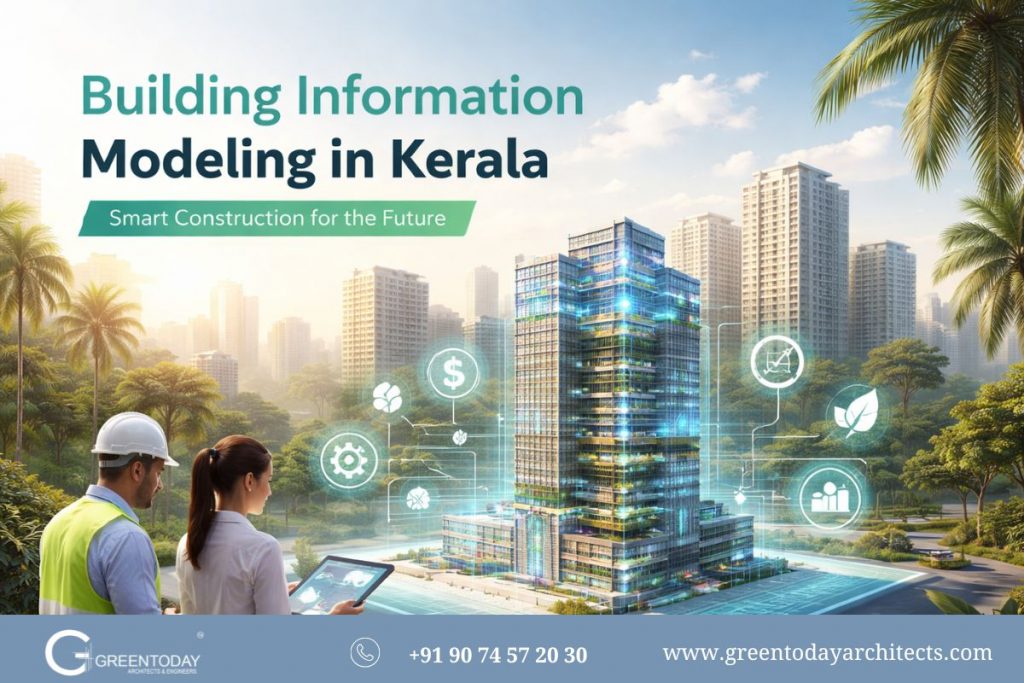
Building Information Modeling (BIM) – Transforming Architecture and Construction in Kerala
The construction industry is no longer driven by drawings alone. In today’s fast-evolving architectural landscape, precision, coordination, sustainability, and efficiency are critical. At the center of this transformation stands Building Information Modeling in Kerala, a powerful digital methodology that is redefining how buildings are conceived, designed, constructed, and managed.
BIM is not just a software tool; it is an intelligent process that integrates every detail of a building into a single digital ecosystem. From the first concept sketch to long-term facility management, BIM creates a data-rich 3D model that connects architects, engineers, contractors, and clients on one collaborative platform.
BIM is not just a software tool; it is an intelligent process that integrates every detail of a building into a single digital ecosystem. From the first concept sketch to long-term facility management, BIM creates a data-rich 3D model that connects architects, engineers, contractors, and clients on one collaborative platform.
What is Building Information Modeling (BIM)?
Building Information Modeling is a smart 3D modeling process that goes beyond geometry. Unlike traditional 2D drawings, BIM embeds detailed information into every component of a structure, walls, columns, windows, plumbing systems, electrical layouts, materials, costs, and timelines.
Each element in a BIM model contains data.
For example:
- A wall is not just a line; it includes material specifications, thickness, thermal properties, and cost.
- A window includes glazing type, energy performance, and installation details.
- Mechanical systems are mapped with exact routing, capacity, and maintenance schedules.
This integrated data approach ensures that every stakeholder works with accurate and updated information.
Enhanced Collaboration and Coordination Through BIM
One of BIM’s greatest strengths is collaboration. In traditional construction, architects, structural engineers, and MEP (Mechanical, Electrical, Plumbing) consultants often work separately, leading to clashes discovered only during construction.
BIM eliminates this issue through clash detection technology. Structural beams, plumbing pipes, and electrical channels are digitally tested for conflicts before construction begins. This drastically reduces:
- Costly on-site errors
- Construction delays
- Material wastage
- Rework expenses
For complex projects, whether luxury villas, commercial spaces, or multi-storey apartments, this level of coordination ensures smoother execution.
Cost Control and Financial Transparency with 5D BIM
Budget overruns are one of the biggest challenges in construction. BIM introduces 5D modeling, where cost estimation is directly linked to the digital model. Every design change automatically updates quantity take-offs and material costs.
This means:
- Accurate budgeting from the early stages
- Real-time cost tracking
- Better financial planning
- Reduced risk of unexpected expenses
For clients, this provides confidence and financial clarity throughout the project lifecycle.
Time Efficiency Through 4D BIM Planning
BIM also integrates time scheduling (4D BIM). Construction timelines are linked to the model, allowing project managers to visualize each phase of the build before it starts.
Benefits include:
- Optimized project sequencing
- Faster construction timelines
- Efficient resource allocation
- Improved site management
This predictive planning significantly improves project delivery performance.
Sustainability and Energy Efficiency in BIM-Based Design
Sustainable architecture is no longer optional, it is essential. BIM plays a crucial role in designing environmentally responsible buildings. With advanced simulation tools, architects can analyze:
- Sunlight exposure
- Energy consumption
- Ventilation efficiency
- Thermal performance
Carbon footprint
For regions like Kerala, where climate sensitivity is vital, BIM enables the design of structures that respond intelligently to tropical weather conditions, maximizing natural light and ventilation while reducing dependency on artificial cooling.
Improved Client Visualization with BIM Technology
Many clients struggle to understand technical drawings. BIM transforms this experience through realistic 3D visualizations and walkthroughs. Clients can explore their homes or commercial spaces virtually before construction begins.
This improves:
- Design clarity
- Decision-making confidence
- Customization flexibility
- Reduced post-construction modifications
When clients can see their future space in detail, communication becomes more effective and satisfying.
Lifecycle Management and Long-Term Value of BIM
The power of BIM extends beyond construction. After project completion, the digital model becomes a valuable asset for facility management. Maintenance schedules, equipment specifications, and repair histories are stored within the model.
This ensures:
- Efficient building maintenance
- Lower lifecycle costs
- Extended structural durability
- Smarter asset management
For commercial buildings and large residential projects, this long-term advantage is significant.
Building Information Modeling in Kerala Construction Landscape
Building Information Modeling in Kerala is driving a significant digital transformation in the construction industry. With increasing demand for smart homes, sustainable villas, and climate-resilient commercial spaces, BIM is becoming a powerful tool for delivering high-performance buildings.
For those who wish to gain a clearer and more practical understanding of Building Information Modeling (BIM) and its real-world application in construction, GreenToday Architects offers both expertise and clarity. Known for architectural distinction and engineering precision, the firm seamlessly integrates intelligent digital planning with climate-responsive design, especially balancing natural ventilation with advanced cooling technologies to create spaces that are elegant, efficient, and comfortable.
The company’s portfolio reflects versatility and refinement, ranging from sophisticated private villas and modern apartment complexes to dynamic commercial spaces and tranquil resort destinations. Every project embodies a careful blend of design imagination, structural integrity, and future-oriented thinking.
At the heart of GreenToday’s methodology lies rigorous groundwork and disciplined execution. Each development begins with detailed geotechnical assessments and evolves through coordinated design integration, precision-led construction management, and environmentally responsible building strategies. The incorporation of biophilic design principles, green construction practices, smart automation systems, and advanced safety frameworks ensures that every space is not only visually impressive but also sustainable, intelligent, and secure.
Guided by the seasoned leadership of senior civil engineer Mr. Faizal M. Asan, the firm upholds uncompromising standards of quality and professional ethics. Transparency is maintained at every stage of execution, supported by strict quality assurance protocols and responsible construction practices. This disciplined approach consistently delivers projects that surpass expectations in durability, performance, and design excellence.
Beyond delivering completed structures, GreenToday Architects, the trusted construction company in Kochi, Kerala, builds enduring relationships. A one-year comprehensive warranty and continued lifetime support reflect their long-term commitment to client confidence and satisfaction.
More than a conventional architectural practice, GreenToday Architects creates meaningful environments, spaces that enhance lifestyles, inspire experiences, and stand resilient for generations.
Companies like GreenToday Architects are leveraging BIM-driven planning to integrate sustainability, accuracy, and modern technology into their projects. By combining digital precision with climate-responsive design principles, the future of construction in Kerala is becoming more efficient, transparent, and environmentally conscious.
The Future of BIM in Architecture and Construction
As artificial intelligence, cloud collaboration, and digital twins evolve, BIM will become even more intelligent. Future buildings will have real-time digital replicas that monitor performance and predict maintenance needs automatically.
Construction is moving toward a data-driven era, and BIM is the foundation of this transformation.
The power of BIM lies in its ability to unify design, cost, time, sustainability, and collaboration into a single intelligent process. It reduces errors, controls budgets, accelerates timelines, enhances sustainability, and improves client experience.
In a world where precision and performance define success, BIM is no longer a luxury, it is a necessity. For architects, developers, and clients aiming to build responsibly and efficiently, embracing Building Information Modeling means stepping confidently into the future of construction.

Corporate Address
GREENTODAY Architects and Engineers
4 B Arcade, Infopark Road, Kusumagiri P.O, Kakkanad- Ernakulam, Kerala – 682030 India
Branch Address
GREENTODAY Architects and Engineers
Peedikayil Building
Cochin Bank Jn
Aluva, Ernakulam, Kerala – 683101
Registered Address
GreenToday Architects and Engineers
‘Breeze ‘
Pattimattom PO 683562 Ernakulam Kerala India
Our Hours
- Monday — Friday 9 am – 5 pm
- Saturday — 11 am – 4 pm
- Sunday — Closed
Service Areas
Contact Us
Follow Us
All rights reserved to GreenToday Architects & Engineers.
Maintained by www.irisqtechnologies.com