
Why Functional Home Design in Kerala Matters More Than Visual Beauty
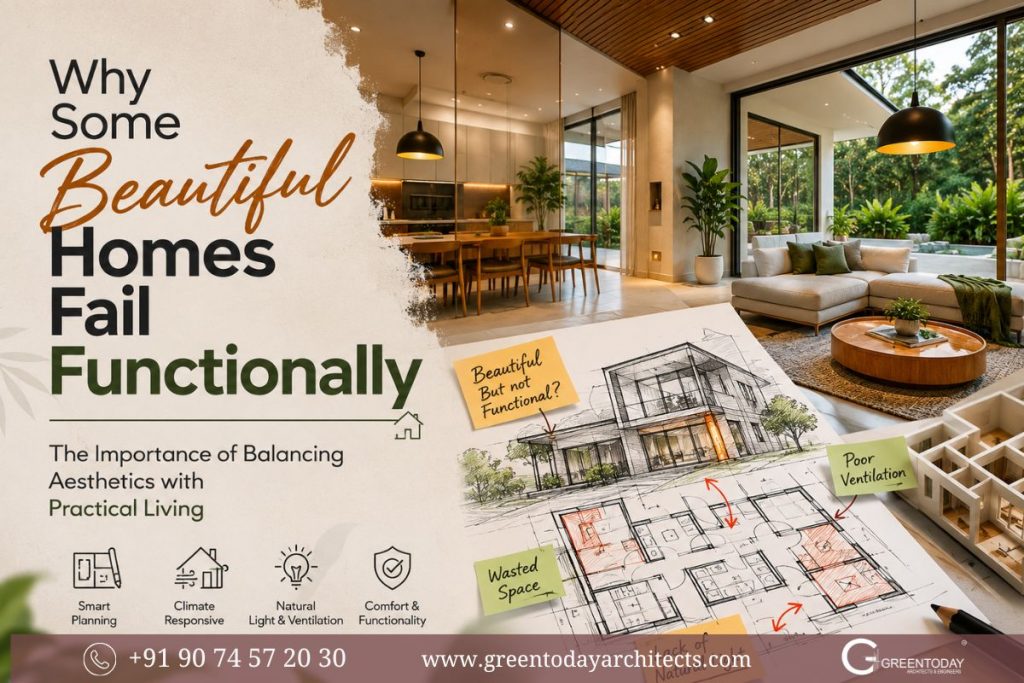
Why Some Beautiful Homes Fail Functionally
In today’s evolving world of functional home design in Kerala, homeowners are increasingly drawn toward homes that create immediate visual impact. Grand elevations, dramatic lighting, expansive glass facades, floating staircases, and ultra-modern interiors often become the defining aspirations of dream homes.
Yet, many visually stunning houses fail in the most important aspect of architecture — functionality.
A home may look extraordinary in photographs and still become uncomfortable, impractical, expensive to maintain, or inefficient for everyday living.
This growing disconnect between appearance and usability is one of the most common architectural challenges seen in modern residential projects.
True architecture is not merely about creating beautiful structures. It is about designing spaces that enhance the quality of life, respond intelligently to the environment, and remain comfortable and efficient for generations.
A successful home is one where aesthetics and functionality coexist harmoniously.
Architecture Is More Than Visual Beauty
A home is not a showroom. It is a living environment where people spend years building memories, relationships, routines, and lifestyles.
While visual elegance is important, architecture must also address:
• Comfort
• Practicality
• Ventilation
• Lighting
• Space efficiency
• Privacy
• Sustainability
• Durability
• Maintenance convenience
• Emotional well-being
When design focuses only on external appearance, the result may be visually attractive but functionally weak.
Good architecture is invisible in many ways because it quietly improves everyday living without drawing attention to itself.
1. Poor Space Planning
One of the biggest reasons beautiful homes fail functionally is inefficient spatial planning.
Many modern houses emphasize dramatic visual concepts while overlooking how people actually move and live inside the home.
Common planning mistakes include:
• Oversized living areas with wasted space
• Narrow bedrooms
• Long unused corridors
• Awkward furniture layouts
• Poor kitchen workflow
• Insufficient storage
• Inconvenient bathroom access
• Lack of privacy between spaces
A visually impressive home becomes frustrating when daily movement feels uncomfortable or inefficient.
Space planning should begin with understanding the client’s lifestyle, habits, family structure, and future requirements.
Functionality must always guide form.
2. Ignoring Kerala’s Climate Conditions
Many homes are designed based on international trends without adapting them to Kerala’s tropical climate.
While certain design styles may look elegant, they may not perform efficiently in regions characterized by:
• Heavy rainfall
• High humidity
• Intense sunlight
• Tropical heat
Common climate-related design mistakes include:
• Excessive glass facades
• Poor shading systems
• Inadequate ventilation
• Flat roofs without proper drainage
• Heat-absorbing exterior materials
These choices often lead to:
• Increased indoor heat
• High electricity consumption
• Moisture accumulation
• Water seepage
• Poor thermal comfort
Climate-responsive planning must remain a core design principle.
Homes should work with nature rather than struggle against it.
3. Overemphasis on Exterior Elevation
Exterior elevation has become a major focus in modern residential projects.
While elegant facades enhance architectural identity, excessive emphasis on appearance can create long-term practical problems.
Highly decorative exteriors with:
• Complex projections
• Heavy cladding systems
• Intricate detailing
• Difficult-to-maintain surfaces
May eventually result in:
• Higher maintenance costs
• Water leakage risks
• Structural complications
• Cleaning difficulties
A well-designed home should maintain visual sophistication while remaining practical, durable, and easy to maintain over time.
True luxury lies in intelligent simplicity.
4. Lack of Natural Ventilation
Many modern homes sacrifice airflow for tightly sealed aesthetics.
Poor ventilation is one of the most overlooked issues in residential design, especially in tropical regions.
Common ventilation problems include:
• Small windows
• Poorly positioned openings
• Blocked cross ventilation
• Overdependence on air conditioning
This can lead to:
• Heat buildup
• Humidity issues
• Mold formation
• Reduced indoor air quality
• Higher energy bills
Natural ventilation is essential not only for comfort but also for health and sustainability.
Integrating airflow optimization into every project creates breathable and naturally comfortable spaces.
5. Insufficient Natural Lighting
A home may appear visually elegant yet feel dark and lifeless internally due to poor daylight planning.
Improper lighting design often results from:
• Overemphasis on privacy
• Poor window placement
• Deep enclosed spaces
• Inadequate skylight integration
Insufficient natural light can negatively affect:
• Energy efficiency
• Mood and mental wellness
• Visual comfort
• Spatial openness
Well-lit spaces feel healthier, larger, warmer, and more inviting.
Natural light needs to be treated as an architectural element rather than merely a lighting solution.
6. Unrealistic Luxury Trends
Social media has popularized several luxury design concepts that may not always suit practical living conditions.
Examples include:
• Double-height spaces in compact homes
• Excessive glass walls
• Minimal storage interiors
• Open bathrooms
• Floating staircases without safety considerations
• Ultra-white interiors difficult to maintain
While these concepts may create strong visual appeal, they often compromise usability and long-term comfort.
Luxury should enhance daily life — not complicate it.
Thoughtful architecture adapts luxury to real-world living.
7. Poor Kitchen & Utility Design
The kitchen is one of the most frequently used areas in a home, yet many aesthetically driven designs neglect its functionality.
Common issues include:
• Insufficient work surfaces
• Poor storage planning
• Inadequate ventilation
• Improper workflow arrangements
• Congested utility spaces
A beautiful kitchen becomes inefficient when it does not support practical daily activities.
Ergonomic kitchen planning is necessary to balance beauty, convenience, and workflow efficiency.
8. Inadequate Storage Planning
Modern minimalist interiors often prioritize clean visual aesthetics while ignoring practical storage needs.
As families grow, insufficient storage creates:
• Clutter
• Organizational difficulties
• Reduced functionality
• Visual discomfort
Functional Home Design Kerala requires well-planned storage solutions such as:
• Wardrobes
• Utility storage
• Hidden cabinets
• Linen spaces
• Kitchen organization systems
• Outdoor storage areas
Smart storage planning improves both aesthetics and usability.
9. High Maintenance Design Choices
Some homes are designed to look impressive initially but become difficult and expensive to maintain over time.
Maintenance-related issues often arise from:
• Complex roof structures
• Hard-to-access facades
• Excessive external detailing
• Poor drainage planning
• Delicate material selections
Over time, these features may lead to:
• Water leakage
• Surface deterioration
• Frequent repairs
• Increased operational costs
Long-term durability and maintenance efficiency are essential to be integrated into the design process from the beginning.
10. Ignoring Future Adaptability
Many homes are designed only for immediate requirements without considering how lifestyles evolve.
A future-ready Functional Home Design Kerala should accommodate:
• Aging family members
• Work-from-home needs
• Technological upgrades
• Expanding families
• Sustainability enhancements
• Accessibility requirements
Flexible architecture increases the long-term usability and value of a property.
Good design anticipates future change rather than resisting it.
11. Lack of Emotional Warmth
Functionality is not only physical — it is emotional as well.
Some visually striking homes feel emotionally disconnected because they lack:
• Human-scale proportions
• Natural materials
• Warm textures
• Personalized spaces
• Biophilic integration
A successful home should create:
• Calmness
• Emotional security
• Comfort
• Relaxation
• A sense of belonging
Architecture deeply influences emotional well-being and mental health.
A true architect believes homes should feel emotionally enriching, not merely visually impressive.
12. Overlooking Sustainability
Homes designed without sustainability considerations often become inefficient in the long run.
Ignoring environmental responsiveness can result in:
• Higher energy consumption
• Poor thermal performance
• Increased cooling requirements
• Water wastage
• Reduced long-term efficiency
Sustainable design improves:
• Energy savings
• Indoor comfort
• Environmental responsibility
• Long-term affordability
Incorporating biophilic principles, energy-efficient planning, and eco-conscious materials creates future-ready living environments.
The Difference Between a Beautiful House and a Successful Home
A beautiful house may impress visitors visually.
A successful home improves life every day.
True architectural excellence lies in balancing:
• Beauty
• Comfort
• Sustainability
• Practicality
• Durability
• Emotional connection
• Environmental responsiveness
The finest homes are not necessarily the most extravagant.
They are the ones that remain comfortable, functional, and meaningful for decades.
How GreenToday Infrastructure Creates Functional Home Design in Kerala
Founded on the principles of intelligent design, sustainability, and uncompromising quality, GreenToday Infrastructure has emerged as a distinguished name in contemporary architecture and construction.
The firm is recognized for seamlessly blending aesthetic excellence with practical functionality, creating spaces that are not merely visually striking but deeply meaningful, efficient, and enduring.
Every project is thoughtfully designed to enhance lifestyle, comfort, and aspirations while maintaining harmony with the surrounding environment.
The portfolio of GreenToday Infrastructure includes:
• Luxurious villas
• Modern apartment communities
• Commercial establishments
• Resort properties
• Institutional projects
Each creation reflects a careful balance between:
• Imagination
• Engineering precision
• Innovative design thinking
The process begins with:
• Detailed soil analysis
• Geotechnical investigations
• Meticulous planning
The firm integrates:
• Biophilic design principles
• Environmentally responsible materials
• Energy-efficient systems
• Smart automation technologies
• Advanced safety measures
At GreenToday Infrastructure, every project is guided by:
• Transparency
• Ethics
• Client trust
• Disciplined execution
• Rigorous quality control
The company offers:
• One-year comprehensive warranty
• Lifetime advisory support
Designing Homes Beyond Appearance
At GreenToday Infrastructure, every project is approached with a holistic design philosophy that combines:
• Intelligent architecture
• Functional planning
• Climate-responsive design
• Structural precision
• Sustainable thinking
• Aesthetic elegance
Our goal is not simply to create visually attractive houses, but to build living environments that genuinely enhance human life.
From luxury villas and modern residences to smart homes and sustainable spaces, every design is carefully tailored to balance beauty with everyday practicality.
Because architecture should not only look exceptional — it should feel exceptional to live in.
Many homes fail functionally because visual appearance becomes the primary focus while practical living requirements are overlooked.
While aesthetics create first impressions, functionality determines long-term comfort and satisfaction.
A truly successful home is one where architecture supports lifestyle effortlessly, responds intelligently to the environment, adapts to future needs, and creates emotionally fulfilling spaces.
At GreenToday Infrastructure, we believe the best homes are those where beauty and functionality exist together in perfect harmony — creating timeless spaces designed not just to be admired, but truly lived in.

Corporate Address
GreenToday Infrastructure
4 B Arcade, Infopark Road, Kusumagiri P.O, Kakkanad- Ernakulam, Kerala – 682030 India
Branch Address
GreenToday Infrastructure
Peedikayil Building
Cochin Bank Jn
Aluva, Ernakulam, Kerala – 683101
Registered Address
GreenToday Infrastructure
‘Breeze ‘
Pattimattom PO 683562 Ernakulam Kerala India
Our Hours
- Monday — Friday 9 am – 5 pm
- Saturday — 9 am – 4 pm
- Sunday — Closed
Service Areas
Contact Us
Follow Us
All rights reserved by GreenToday Infrastructure
Maintained by www.irisqtechnologies.com